Sunday Sermon
October 19, 2025
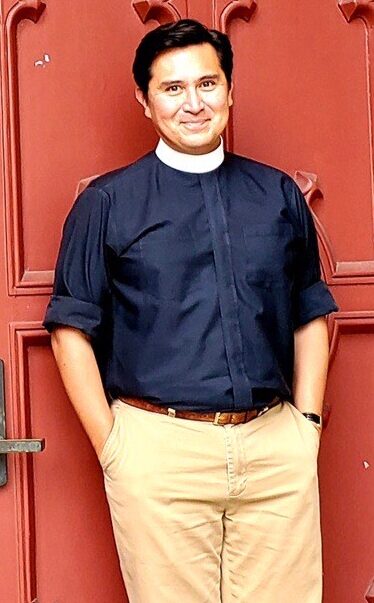
The Rev’d Michael J. Horvath
Genesis 32:22-31, 2 Timothy 3:14-5:5, Luke 18:1-8
There’s something raw and deeply human about Jacob wrestling all night with that mysterious stranger by the river. He’s on the edge of everything – his family, his future, his past. He’s about to meet the Esau, the brother he betrayed, the one he stole from. And instead of sleeping to prepare for this big moment, Jacob spends the whole night wrestling with – well, some say a man, others an angel, others God himself.
Whatever – or whoever – it was, Jacob refuses to let go. “I will not let you go unless you bless me,” he says. It’s bold, maybe even desperate. He had had a history of fighting and scheming his way through life, and this time he’s determined to wrestle his way into redemption. But the blessing he gets is not what he expects. He walks away with a limp – and a new name. “You shall no longer be called Jacob, but Israel, for you have striven with God and with humans, and have prevailed.”
A limp and a name. That’s the blessing.
I’ve always loved that moment because I think most of us have wrestled with who we are, with who God is, and with who we’re becoming. We might not wrestle beside a river, but we wrestle in the middle of the night with regrets, doubts, fear, or the weight of who we used to be or who we want to become.
And sometimes, out of all that wrestling, we come away changed – sometimes limping, yes – but changed nonetheless.
You know, when I was growing up, I was called Mike. That was just the name everyone used. Teachers, family, friends – it was easy, it was casual, it fit. The only time my full name was uttered was when I was in trouble, so my parents were well used to using my full name. But somewhere around the age of ten, I started to sense that “Mike” wasn’t exactly who I was anymore. It’s hard to explain at that age why something as small as a name matters, but I remember knowing deep down that “Michael” felt truer. More me. It had weight, somehow. So, I told people I wanted to be called “Michael.”
Now, it wasn’t some grand spiritual awakening. I didn’t hear a voice from heaven. But it was the first time I can remember claiming an identity for myself that felt aligned with who I was becoming. And looking back, I think that was a kind of spiritual shift—one that said, “I’m not just who other people say I am. I’m someone God is still forming, still naming.”
So when I read Jacob’s story, it hits home. Because God’s always been in the business of renaming people—of redefining them according to divine relationship rather than human history. Abram becomes Abraham. Sarai becomes Sarah. Their new names come with new promises: that they will be ancestors of a people blessed to bless others.
Joseph gets a new name in Egypt – Zaphenath-paneah – because his identity evolves from forgotten brother to becoming the person who interprets Pharoah’s dreams. In the Book of Ruth, Naomi tells her friends to call her Mara (meaning “bitter”), because her grief has changed her so much that she can’t bear the name of Naomi, which means “pleasant.”
In the New Testament, it keeps happening. Simon becomes Peter – the rock upon which Jesus will build the church. Saul becomes Paul after his encounter with the risen Christ, moving from persecutor to apostle. Even the early Christian community receives a new name; followers of “The Way” become known as “Christians.”
It’s like God is saying, “You are not trapped by who you used to be. You’re not defined by what you’ve done or what’s been done to you. You’re defined by the relationship you have with me.”
Which brings us back to Jacob limping away from the river at dawn, clutching both his wound and his blessing. His new name, Israel, literally means “one who strives with God.” That’s not a name for someone who has it all figured out – it’s a name for someone who’s been in the struggle, someone who refuses to let go.
That kind of tenacious, faithful persistence gets mirrored in Luke’s Gospel, where Jesus tells the story of a widow who keeps coming to an unjust judge demanding justice. Day after day, she knocks on his door, insisting that he hear her case. And finally, just to get her to stop, he gives in. Jesus says, that’s what faith looks like. That’s what prayer looks like. It’s not polite or perfect—it’s persistent. It’s wrestling with God and the world until something shifts.
And just like Jacob, that persistence changes us.
I think that’s what Paul was getting at when he wrote to Timothy: “Continue in what you have learned and firmly believed… proclaim the message, be persistent whether the time is favorable or unfavorable.” Faith isn’t about certainty – it’s about persistence. It’s about trusting that God’s not done naming and renaming us yet.
The problem is, we often cling to the old names. The ones that have been assigned to us by others, or the ones we’ve assigned ourselves. “Failure.” “Not enough.” “Too much.” “Unworthy.” “Broken.” Sometimes the name comes from childhood, sometimes from a relationship gone wrong, sometimes from a lifetime of small wounds that pile up into a story we start to believe about ourselves.
But the gospel insists that those names aren’t the final word. God calls us something else. Beloved. Forgiven. Redeemed. Chosen. Whole.
Maybe you’ve felt like Jacob lately – wrestling in the dark with who you are, or who you’ve been, or who you hope to be. Maybe you’ve been fighting to understand what faith even looks like right now. Maybe you’ve been limping through your prayers, wondering if God’s still listening.
Take heart. That limp means you’ve been close enough to God to be changed.
Jacob’s limp wasn’t punishment – it was a reminder of the encounter. A mark of transformation. He didn’t lose the fight; he was claimed by it. He was renamed, reshaped, redefined.
And maybe that’s true for us too. The times we struggle the most – the sleepless nights, the unanswered prayers, the long waiting – those might be the very places where God is doing the slow, sacred work of renaming us.
Because when Jesus asks at the end of that parable, “When the Son of Man comes, will he find faith on earth?” I don’t think he means, “Will he find people who’ve got everything perfectly sorted?” I think he means, “Will he find people who are still wrestling? Still praying? Still showing up even when they’re limping?”
The widow, Jacob, Paul, Peter – all of them show us that faith is not about having it all together. It’s about staying in the struggle, trusting that the God who meets us there will bless us with a new name, a truer one.
And that’s good news. Because whatever names we’ve been carrying—whatever versions of ourselves we thought were set in stone – God’s not done naming us yet.
So maybe this week, take a moment to listen. To wonder what new name God might be whispering to you. Maybe it’s one you already know in your bones, the way I did when I decided I was Michael, not Mike. Maybe it’s something you’re only beginning to hear.
But whatever it is, trust that the One who wrestles with us, the One who calls us by name, is also the One who refuses to let go until we are blessed.
Amen.