Sunday Sermon
Sermon for the First Sunday of Advent
November 30, 2025 Yr A
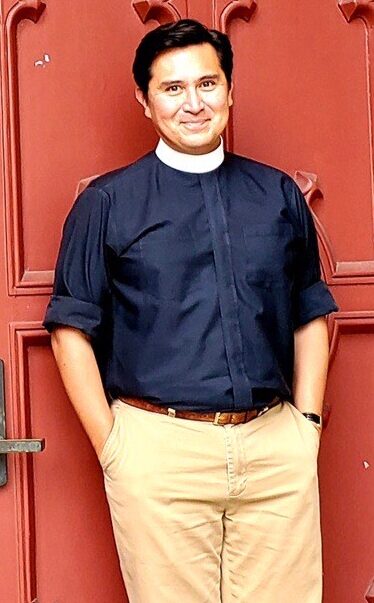
The Rev’d Michael J. Horvath
Romans 13:11-14; Matthew 24:36-44
Advent always sneaks up on me. One minute I’m finishing a leftover turkey sandwich
and Saturday night I’m standing in the sanctuary with a barely-working lighter, trying to
coax the first candle of the Advent wreath into flame like some kind of ecclesiastical
pyromaniac. And every year, that tiny flame feels both too small for the darkness of the
world and yet somehow exactly enough. That’s the strange energy of Advent: this
season that whispers, “Wake up,” while also saying, “And while you’re waking up, God
is already doing something wild and disruptive and holy right under your nose.”
Paul doesn’t mince words when he tells the Romans that “you know what time it is.” I
appreciate this, because most days I, in fact, do not know what time it is. I mean, yes, I
can read a clock. But spiritually? Emotionally? Cosmically? Half the time it feels like I’m
stuck in a perpetual in-between: too late for one thing, too early for another. And then
Advent comes with its deep purple and its impatient candles and says, “Actually,
beloveds, it’s time. It’s time to wake from sleep. The night is far gone. The day is near.”
Which sounds so clear, except that the day Paul is talking about isn’t exactly something
I can mark in my iPhone calendar.
Jesus, in Matthew, doesn’t make it any easier. He says nobody knows when the Son of
Man is coming—not angels, not heavenly VIPs, not even Jesus himself, which is
honestly a little comforting. If Jesus doesn’t know what time it is, then at least I’m in
good company. And then he gives these very vivid images about people eating and
drinking and getting on with life, and then suddenly, boom—an arrival. It’s unsettling. It’s
ambiguous. It’s a little weird. Which, frankly, means it fits right in with Advent.
But here’s the thing: both Paul and Jesus are saying that the point is not pinning down
the moment God shows up. The point is becoming the kind of people who are awake
enough to notice God when God does.
This is the part I have to sit with, because for many of us “being awake” sounds
exhausting. We already feel like we’re living in a world that keeps ringing alarm bells:
climate disasters, political chaos, wars we cannot wrap our hearts around, violence in
our communities, grief that piles up faster than we can name. And now Advent arrives
with its sparkly-eyed enthusiasm saying, “Wake up! Get ready! Be alert!” And some of
us want to say, “Friend, I don’t need another thing to stay vigilant about. I need a nap.”
But Paul isn’t talking about vigilance as fear. Jesus isn’t either. They’re not telling us to
pace around like anxious night guards. They’re saying the world is not falling apart so
much as it is falling open. Something is breaking through. God is coming toward us. And
staying awake means refusing to sleepwalk past the holy that is insisting on being born.
This is where Advent shifts from passive waiting—twiddling our thumbs until the divine
finally gets its act together—to active participation. We are not waiting for God to show
up like we’re waiting for our number to be called at the DMV. Advent is not spiritual
loitering. We are being invited into labor. Into midwifery. Into the sweaty, unglamorous,
courageous work of helping God’s kingdom break in.
Paul talks about laying aside the works of darkness and putting on the armor of light.
And maybe, for some of us, the first work of Advent is actually believing that we have
access to that light, that we are allowed to wear something so gloriously luminous.
Maybe it means refusing the script that says we are too small or too flawed or too late to
participate in God’s kingdom. Maybe it means stopping the inner voice that says, “I’m
not holy enough,” or “I’m too tired,” or “Other people are better at this Jesus stuff than I
am.” Because the truth is, Advent has never been about who is qualified. Advent is
about who is willing.
Jesus gives those strange little comparisons—two people in a field, two women grinding
meal. One is taken, one left. I know those verses have been turned into all kinds of
bizarre end-times fan fiction, but Jesus isn’t trying to scare us with divine abductions.
He’s saying God shows up right in the middle of ordinary life. Right there in the field.
Right there at the mill. Right there where you are just trying to get dinner on the table or
answer one more email or figure out why your dog is suddenly afraid of the toaster. God
is breaking in not at the edges of life but smack in the middle of it.
Which means our job is not to ascend some spiritual mountain or achieve some
mystical enlightenment. Our job is simply not to be spiritually unconscious while God
transforms the world right under our feet. It’s noticing the neighbor who needs a
listening ear. It’s deciding to practice generosity even when the world tells you to cling
and hoard. It’s telling the truth when everything around you rewards the lie. It’s resisting
cruelty in all its casual forms. It’s showing up at the hospital bed, or the food pantry, or
the difficult conversation, or the quiet prayer you’re not even sure counts as prayer.
It’s putting on the armor of light one small act of compassion at a time.
But maybe more than anything, Advent asks us to trust that God is not asking us to
manufacture salvation. God is asking us to participate in what God is already doing. To
lean toward the light that is already rising. To join the divine conspiracy of hope.
And yes, I know that hope can feel like a risky thing these days. Hope can feel naïve.
Hope can feel like standing in the dark with one tiny candle and pretending it’s enough
to push back night. But every year, Advent has the audacity to insist that our small lights
matter. That hope is not a feeling but a practice. And that the world is not saved by a
single brilliant blaze but by many flames scattered across the night, insisting together
that dawn is on its way.
Sometimes I think God intentionally chooses to work through small things because God
knows we are easily overwhelmed. If God came at us with full glory—crashing cymbals,
heavenly trumpets, a press release from the archangels—we’d all just faint. But a
candle? A whispered hope? A child born in a barn because there was no room
anywhere else? That we can handle. That we can participate in.
So maybe this Advent, instead of asking, “God, when will you show up?” we ask, “God,
where are you already showing up, and how can I join you there?” Maybe instead of
4
staring anxiously at the horizon, we look at our own hands. Maybe instead of waiting for
a divine thunderclap, we wake up to the holy stillness of the present moment.
Jesus is not calling us to fear the unknown hour but to trust that whenever it arrives, it
will be an hour of mercy. Paul is not calling us to moral perfection but to surrender the
parts of ourselves that keep us numb, distracted, and asleep. Advent is not about
getting ready for the world to end. Advent is about getting ready for the world to begin
again.
So wake up. Not because danger is lurking, but because holiness is. Wake up because
God is already walking toward us like dawn creeping over the horizon. Wake up
because the kingdom is not some distant dream. It is breaking in—through cracks in our
cynicism, through acts of tenderness, through justice we fight for, through mercy we
choose to offer, through every moment we dare to love when loving feels foolish.
Wake up because you are not just a spectator of God’s kingdom. You are a participant.
A co-conspirator. A bearer of light.
And if that sounds like a lot of responsibility, remember this: nobody ever asked you to
be perfect. Advent only asks you to be awake. Awake enough to notice the Christ who
is always coming toward you. Awake enough to take your place in the holy work of
making room. Awake enough to light one small candle against the dark and trust that
God is doing the rest.
Amen.