
The Sunday Sermon
Healing of the Blind Man
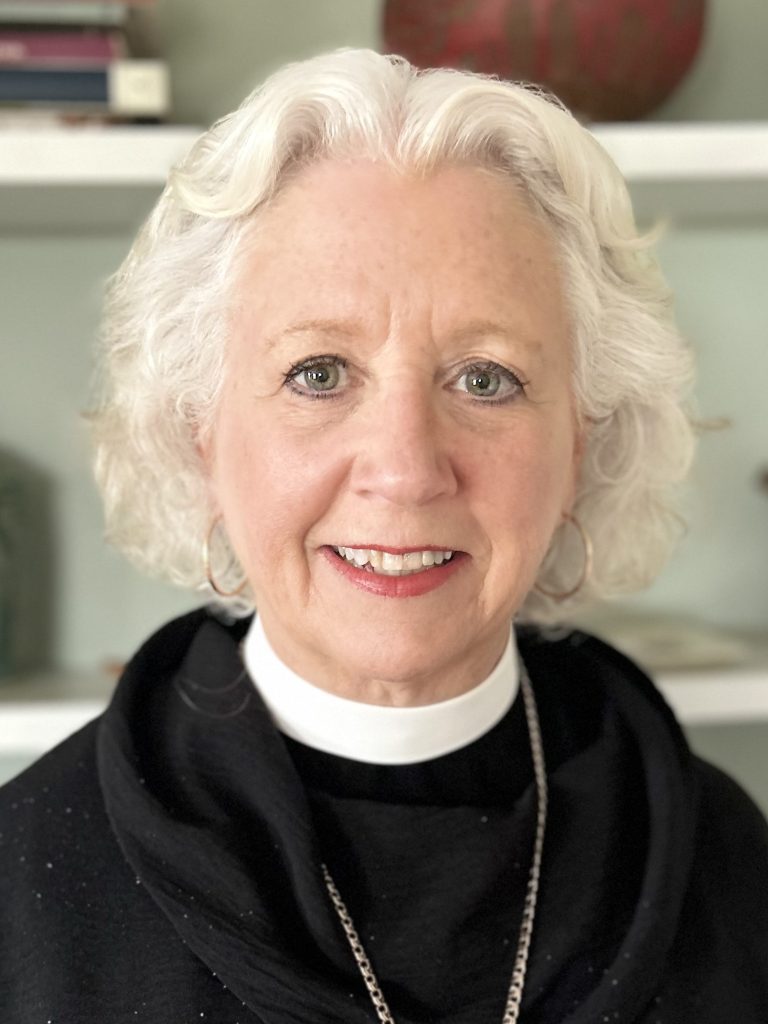
A Sermon by The Rev. Margot D Critchfield
Lent IV: March 15, 2026
1 Samuel 16:1-13; Psalm 23; Ephesians 5:8-14; John 9:1-41
I haven’t done a word count, but I’d be willing to bet that’s the longest Gospel reading in the
lectionary! I promise to spare you a correspondingly long sermon. But there are so many
possible paths to pursue in this story–far too many to cover in any one sermon.
The most obvious focuses on the not-so-subtle irony of the blind man vs. the sighted Pharisees.
The Pharisees think they are enlightened, that they know or “see” everything, but are living in
the dark, spiritually blinded by their pride, unable to see Jesus. The humble blind man on the
other hand, is the one who sees Jesus for who he is and is spiritually enlightened.
There are wonderful parallels to be drawn there between the Pharisees and today’s Secularists—
both so closed minded, so sure they’ve got it right, that they dare not entertain anything
that might turn their intellectual constructs of reality upside down.
Another possible path to pursue explores how the blind man’s parents abandon him to the
Pharisees out of shear fear of what other people will think or do. They could be ostracized for
their faith, cut off from their peers, so they buckle under the pressure and refuse to name Jesus.
It’s also really intriguing to notice how the blind man’s faith evolves slowly—how he sees more
and more clearly as time goes on, and in response to repeated questioning from others; to watch
how he gradually moves from referring to “the man named Jesus” to calling him “a prophet,”
Then “a man of God,” before finally proclaiming, “Lord, I believe!” and worshipping him.
But I want to focus on something else in this text. I want to focus on the healing Jesus does
before he cures the blind man. Because it’s healing to which we might easily be blind ourselves.
And it’s healing that reveals Jesus’ most amazing grace.
Who sinned, this man or his parents that he was born blind? It seems a rather barbaric view to
us today, to see sin as the cause of every disaster, disease or disability. But it was accepted first
century theology. It was the lens through which they made sense of suffering, sickness, trial and
tribulation. People sinned; God punished.
Theologically we’re more sophisticated—and compassionate—than that now, but I’m not sure
how much we’ve really changed down at the gut level. In some denominations, people still grow
up believing in a God who—like some sort of Santa Claus—rewards the good and punishes the
bad.
And how often do we hear folks ask if the fellow who had the heart attack was overweight, or the
person with cancer smoked, or where the girl was or if she was dressed appropriately when she
was assaulted?
How often are we the ones asking those questions, desperately looking for an explanation for
such seemingly senseless sorrow?
How many of us have been on the receiving end of such disquieting questions—questions from
well-meaning folks groping in the dark to find a reasonable explanation for our misfortune—
searching for someone or something to blame so it all just makes sense?
Who sinned, this man or his parents, that he was born blind? Imagine for a minute being the
blind man in today’s gospel as he hears those words, how his finely tuned ears must burn with
anticipation for Jesus’ answer. He’s probably been asking himself that question all his life.
Why me, God? What did I do to deserve this? Deep down inside, the blind man may have
always figured it was his own fault he was born blind. He may have always feared that there was
something fundamentally wrong with him… something bad, or sinful, or just not good enough,
so that he deserved to be like this.
I imagine that every time he sensed the eyes of his neighbors or other passers-by staring at him,
he probably felt like they were seeing right through him. Seeing the real him, the wretch that he
is.
The fundamental problem is that this poor blind man is lost in the small, dark world of fear and
shame. He’s been living there all his life, cut off from the Light of the spirit, unable to see. It’s a
powerful demon, shame. It can suck the life right out of us. Shame about our appearance or our
infirmities, our insecurities or our emotions. Shame about our sins or our shortcomings, our
circumstances or our sexuality. Shame about who we are, how we are, what we’ve done or where
we’ve been. I dare say most of us have suffered from this soul sickness that blinds us like no
other, called shame.
Who sinned, this man or his parents? Listening closely now, the blind man suddenly hears the
most amazing grace-filled words coming from the man they call Jesus—precious words he’d
never even dreamt of: “Neither this man nor his parents sinned.”
Wait, what? Neither this man nor his parents sinned?
Talk about “how sweet the sound!” Neither this man nor his parents sinned. Can you imagine
how sweet those words sounded to the blind man, or what relief he felt after blaming himself all
his life? There’s something about the way this man Jesus says the words, the compassionate and
authority in his voice, the love with which he says it. The blind man can’t help but believe him.
Remember he’s still physically blind at this point. Yet through the presence of the One who calls
himself the Light of the World, the blind man is beginning to see the truth! He sees that it was
never his fault, or his parents’ fault. Sees that his whole world is turning upside down. Sees years
of bitterness, resentment, self-blame and shame being healed by the amazing grace of this man
Jesus. And he didn’t even do anything to deserve it. He didn’t earn it.
What a revelation that must’ve been! And what freedom he must’ve felt! But then there’s more:
“Neither this man nor his parents sinned; he was born blind so that God’s works might be
revealed in him”. God’s works might be revealed in him?
The blind man hears this, too, with first century ears—and it is breath-takingly good news. He
hears that although he was born blind, God can take even his wretched, blind self and make
something beautiful of it. He hears that nothing, not even all his years of suffering, is wasted in
God’s economy. He hears that his whole life hasn’t been for nothing, that God can actually
redeem it, give it meaning, and use it. Perhaps for the first time in his life, the blind man sees
with eyes of hope.
The astonishing thing is that this is just the beginning of his spiritual journey, a journey that has
been born not of a faith so powerful it led to healing, but of a healing so powerful it will surely
lead to faith. It’s a faith that will evolve more slowly than the healing, but no less profoundly.
With the additional gift of his physical sight, the man with the new vision will meet many
dangers, toils and snares in his travels. His spiritual journey won’t be an easy one, but we all
know spiritual journeys rarely are.
You may have noticed it seems to take the man an inordinately long time to recognize Jesus for
who he is—but he does get there. Gradually, as he is challenged with questions, the man begins
to see the more clearly: He goes from seeing Jesus “the man called Jesus,” to “a prophet,” to
someone who “must be from God” before the infinitely patient Jesus finds him, meets him where
he is—literally– and in a scene that should do all our hearts good, the man physically sees Jesus
clearly for the first time—looks him straight in the face—and still doesn’t recognize him for who
he is.
But he’s willing. God bless him, he’s willing. And that’s really all it takes: That willingness to
see. So, when Jesus finally comes right out and reveals his identity, the man immediately
professes his faith and begins worshipping the one he now calls Lord. The one who loves him for
the imperfect creature he is, the one who heals all his broken places, the one who gives him
vision and puts Light into his world.
The man was blind, but now he sees. Was lost but now he’s found. Amazing grace, indeed!
May each of us come to know this amazing grace as intimately as the blind man, to see the
healing truth about Jesus, and to finally proclaim—with our eyes wide open and free of shame—
“Lord, I believe!” Amen.
St. Mary’s Episcipal Church