Sunday Sermon
August 16, 2026 Yr A
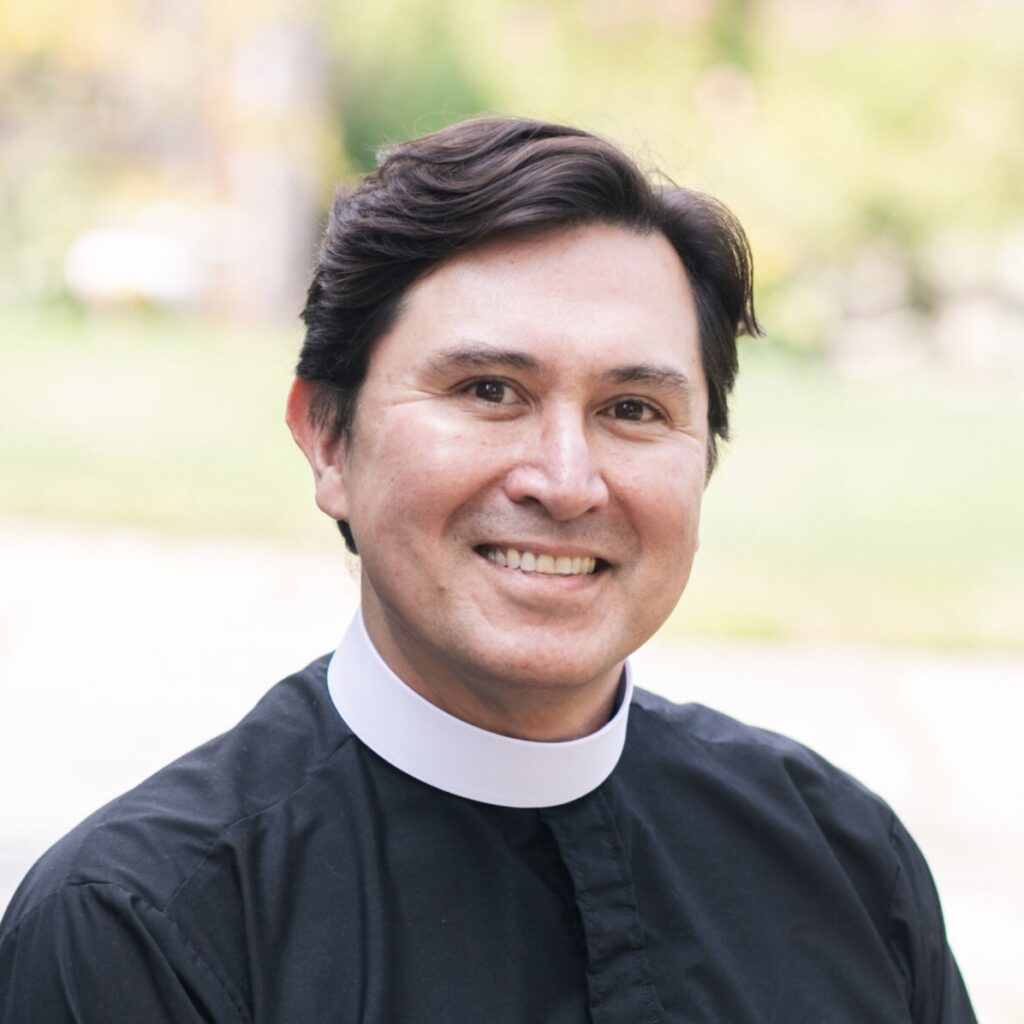
The Rev’d Michael J. Horvath
Matthew 15:10–20, 21–28
The disciples have recently witnessed Jesus feed more than five thousand people with five loaves and two fish. They watched the crowd eat until everyone was satisfied, and then they gathered twelve baskets of leftovers. The whole event was a rather spectacular demonstration that Jesus approaches scarcity differently from the rest of us. The disciples carried those baskets with their own hands. Yet when a Canaanite woman comes crying out for mercy, they suddenly behave as though the pantry is empty.
“Send her away,” they tell Jesus. Apparently twelve baskets of leftovers can disappear from the human imagination remarkably quick. But the disciples have plenty of company. Human beings possess an impressive ability to witness abundance on Sunday and panic about scarcity by Monday morning. We look at a world capable of producing enormous quantities of food, developing life-saving medicines, building astonishing technology, and launching billionaires into space, and then we shrug when someone asks why children are hungry. We have the resources to perform extraordinary feats, while basic human needs somehow remain perpetually beyond the budget.
Scarcity has become one of our favorite explanations. There is only so much to go around. The numbers require difficult choices. Resources have limits. The system lacks capacity. We hear these phrases whenever someone talks about feeding hungry families, providing medical care, housing people, supporting schools, caring for elders, or welcoming refugees.
Scarcity also has a curious habit of appearing around certain people. Plenty seems available when a corporation seeks another tax incentive, when a stadium needs renovations, or when weapons need purchasing. Then someone asks whether a diabetic person should be able to afford insulin, and everyone becomes deeply concerned about fiscal responsibility.
The disciples employ their own version of this reasoning. Jesus has come for the lost sheep of Israel. His mission has a particular focus. This woman comes from outside that circle. She belongs to another people. Her request disrupts the itinerary. Her shouting makes everyone uncomfortable. The disciples want Jesus to send her away, perhaps so they can return to the important spiritual work of discussing compassion among themselves. The woman keeps shouting. Her daughter is tormented. A mother whose child is suffering has little interest in polite boundaries. She approaches Jesus, kneels before him, and says, “Lord, help me.”
Jesus responds with an image of bread prepared for the children and dogs waiting beneath the table. The words land with force. The image reflects the deep division between Israel and the Canaanites, between insiders and outsiders, between the people who belong at the table and the people expected to remain under it.
The woman stays. She listens closely enough to find an opening inside the image. “Yes, Lord,” she says, “yet even the dogs eat the crumbs that fall from their masters’ table.” It is one of the boldest lines in all of Scripture. She takes the image handed to her and turns it toward mercy. She sees abundance where everyone else sees a boundary. The disciples saw five thousand people fed and still thought mercy could run out. This woman saw crumbs and understood that grace spills everywhere.
She grasps something essential about Jesus. Wherever he goes, there is always more: more bread, more healing, more forgiveness, more room at the table. The disciples keep trying to manage access. The woman understands overflow. Jesus looks at her and says, “Woman, great is your faith.” Her daughter is healed at that very hour.
Great faith, in this story, means trusting the abundance of God with enough courage to challenge every system that rations mercy. Great faith hears the language of scarcity and remembers the twelve baskets left over. Great faith believes that another person’s healing adds to the joy of the world.
Jesus begins this passage by teaching that true defilement comes from the human heart and flows outward through our words and actions. Evil intentions, deceit, violence, and slander reveal what lives within us. Purity becomes a question of what we release into the world.
That teaching places an uncomfortable question before humanity. What comes out of us when another human being cries for help? Compassion or suspicion? Generosity or resentment? Welcome or anxiety? Do we sound like the woman who believes in abundance, or like the disciples guarding resources that arrived in their hands through grace, good fortune, or the labor of others?
Every society tells stories about scarcity. Nations count tax revenue, hospital beds, housing units, school budgets, available jobs, and social benefits. I’ve attended meetings in which committees have spent three hours discussing whether hungry children qualify for school lunch, while everyone in the meeting was noshing on a catered sandwich. Responsible stewardship requires careful choices, true, but the danger arrives when the spreadsheet becomes a substitute for moral imagination. What has humanity already been given?
Fields capable of producing food. Scientists capable of developing medicine. Builders capable of creating homes. Teachers ready to educate children. Wealth accumulated across generations. Technologies that connect continents in seconds. Communities capable of caring. Human creativity waiting to be directed toward human flourishing.
Scarcity says, “Send them away.”
Faith says, “There is something here.”
Faith sees the food already growing, the buildings already standing, the medicine already developed, and the wealth already accumulated. Faith asks why hunger thrives amid abundance, why illness leads to bankruptcy, and why housing has become a
luxury.
To be honest, the deepest scarcity in our world may be a scarcity of imagination. We have grown accustomed to suffering that human choices could relieve. Hunger appears inevitable. Homelessness appears permanent. Medical care becomes a privilege. We speak as though these realities descended from heaven engraved on stone tablets. Human decisions created these arrangements, and human decisions can create something better.
The Canaanite woman possesses the imagination everyone else has surrendered. She sees possibility inside a metaphor meant to close the conversation. She sees a meal large enough to spill beyond the table. She sees mercy moving across a boundary. She believes that her daughter’s healing will enrich the world. Her courage reveals the wideness of God’s purpose, even to the people closest to Jesus.
She also reveals something about the human vocation. We were created for life together. Our humanity grows as we recognize the humanity of others. Every hungry child, every frightened refugee, every sick neighbor, and every family searching for shelter belongs to the same human family. And Jesus has already shown us the truth.
There is bread.
There is plenty.
And there is still room at the table.
Amen.