Sunday Sermon
November 1, 2026 Yr A
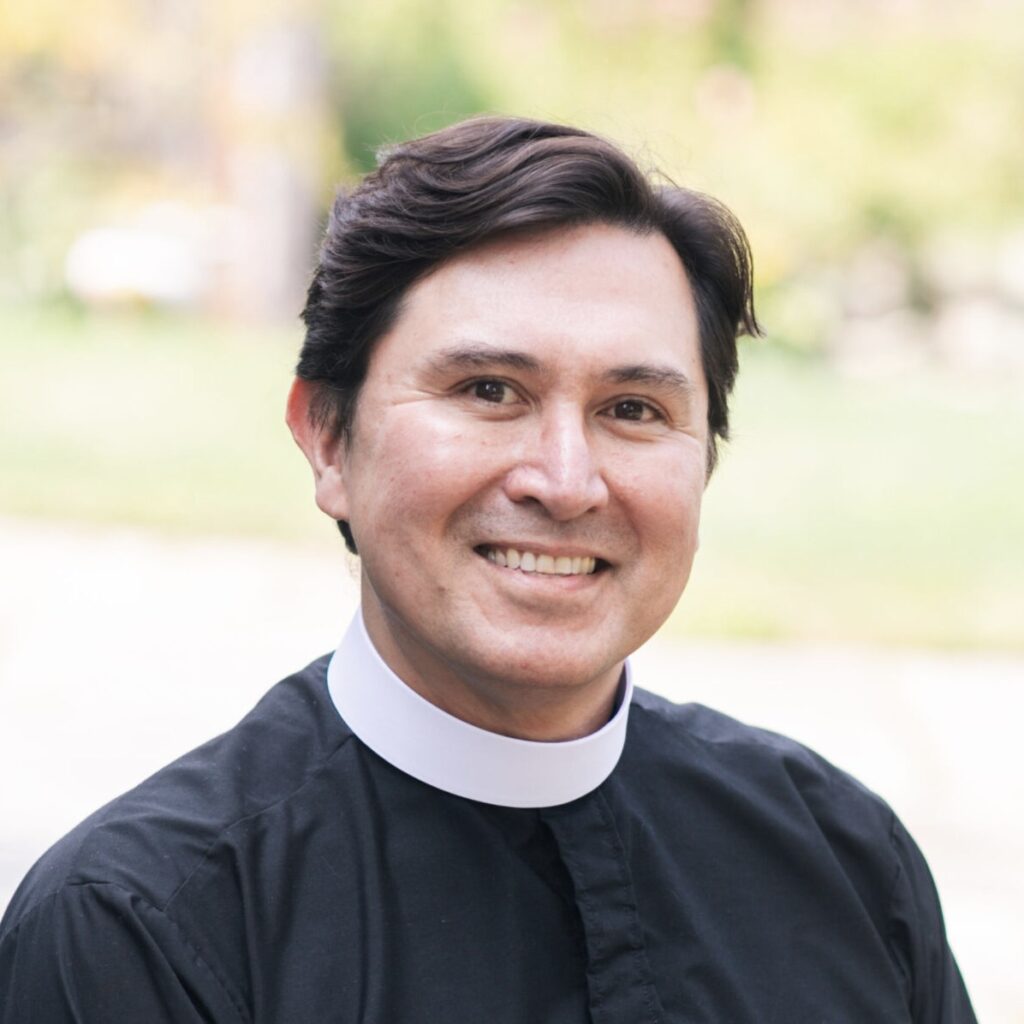
The Rev’d Michael J. Horvath, Gospel: Matthew 5:1-12
One of the lovely things about a baptism is that two young children can arrive at church with their family and leave with an astonishing number of relatives. This morning, Clara and Emma are acquiring quite a family. Some of us sing beautifully. Some sing enthusiastically. Some have strong opinions about the proper way to load a dishwasher in a church kitchen. And all of us are about to make a promise that these two little girls will depend on other people to remember and keep.
Their parents and godparents will make promises, of course. They have particular responsibilities for helping Clara and Emma grow in faith. But at a certain point, I will turn to everyone gathered here and ask whether we will support them in their life in Christ. And the congregation will answer, “We will.”
That is a considerable promise to fit into two words. We ought to take a moment to consider what we’re saying.
We’re promising to help make a community in which Clara and Emma can grow, ask questions, discover their gifts, and experience the love of God through people who know their names. We’re accepting responsibility for their welfare. We’re promising to care about the world they will inherit and the kind of church they will encounter as they grow. Their baptism gives the rest of us something to live up to.
And All Saints’ Day is a wonderful day to make that promise, because today we remember just how large this family is.
When we say “the communion of saints,” we’re speaking about a community that stretches across centuries and continents, embracing people whose stories fill books and people whose names have disappeared from every record. It includes the faithful departed whom we love and miss, whose influence still turns up in the way we pray, the meals we cook, the advice we hear ourselves giving. Sometimes we open our mouths and discover that someone who has been dead for twenty years is still managing to express an opinion.
Some of those people helped us believe that we were worth loving. Some sat beside us through something terrible. Some taught Sunday school, visited the sick, or quietly paid attention when everyone else was busy. Through their particular, ordinary lives, something of God’s love reached us.
Today we give thanks for them. We entrust them to the God who holds them in life beyond our sight. And we take our place in the community whose life they helped to shape.
In our reading from Revelation, that community becomes a great multitude, gathered from every nation, people, and language. Imagine the stories in that crowd, the different journeys, the people who would have struggled to understand one another on earth, gathered together in the presence of God. Christ holds them together. Their suffering is known, their hunger is answered, and their tears receive God’s tender attention.
That is the family into which Clara and Emma are being baptized. Here at St. Mary’s, they encounter one small, wonderfully particular part of it.
Our epistle gives us the words to understand their place within it: “Beloved, we are God’s children now.”
There is something deeply reassuring about that word “now”. Our belonging begins right here, with the people we are today, while so much of our life is still unfolding. God’s love meets us before we can explain ourselves, before we have settled all our questions, before anyone knows what we will become.
At a baptism like this one, we can see that quite clearly. Their family and this congregation will speak the promises on Emma and Clara’s behalf, and we trust that God’s grace is already at work in their lives. They belong here now, with all the growing still ahead of them.
Anyone who has helped raise a child knows how much remains a mystery. You watch a personality emerge, an interest take hold, a sense of humor develop. You discover that this person has opinions of her own, sometimes quite forceful opinions about a perfectly reasonable pair of shoes.
Love makes room for that unfolding. It pays attention. It stays curious.
John holds together those two things: the certainty that we are God’s children now and the mystery of what we will become. That seems like a good starting point for the promises we make today. Clara and Emma have lives ahead of them that belong to them, with discoveries and questions we can scarcely imagine. Our responsibility is to offer them a community whose love has room for that discovery.
As they grow, their faith will become their own. They will decide how to respond to the invitation we offer, and their lives may take them far from St. Mary’s. They may return occasionally for a holiday or a family visit. They may never come back. They may grow up in another church, or their paths may lead them somewhere entirely. But today, we make our promise freely, with a love that reaches beyond their future attendance here.
We are promising to support their life in Christ wherever that life unfolds. We can pray for them, care for their family, and help build a church and a world in which they can flourish. And if they come through these doors years from now, we can welcome them as people whose place in this family has been theirs all along.
And just what is the nature of that family?
Jesus looks at the crowd and speaks his blessing over people who are mourning, people who are merciful, people longing for righteousness, people working for peace. He sees lives that carry tenderness and sorrow, courage and vulnerability. In his presence, those lives matter.
That gives us a very practical way to think about being a baptismal community. When someone has experienced some personal joy, we can join them in celebration. When someone is grieving, we can become people who stay close after the funeral, when the house grows quiet and everyone else’s calendar fills up again. When someone has made a mistake, we can practice mercy. When When someone is being treated cruelly, we can stand beside them and use our voices. When conflict comes, we can learn the patient work of making peace.
The children in our midst learn something about Jesus from the way we do those things. They notice how we speak about people, how we handle disagreement, whose needs receive our attention. Our common life helps give meaning to the water and the words we share today.
Of course, we will need forgiveness along the way. Every community does. Part of growing in Christ is learning how to acknowledge harm, make amends, and begin again. Children deserve to see adults doing that, too.
And all of us need somewhere we can bring our own unfinished lives. There are people here today carrying questions they have barely found words for. There are people missing someone terribly. There are people who could use a little of the care we are so ready to promise these girls. The communion of saints makes room for us as well. We take turns carrying one another.
Clara and Emma will probably know this morning through photographs and stories their family tells them. We will remember something else as well: the moment when we were asked to take responsibility for two children whose futures are still opening before them, and we answered together.
In a few moments, we will say, “We will.” May God give us the grace to spend the years ahead putting those words into practice. Amen.