Sunday Sermon
October 18, Proper 24 Year A
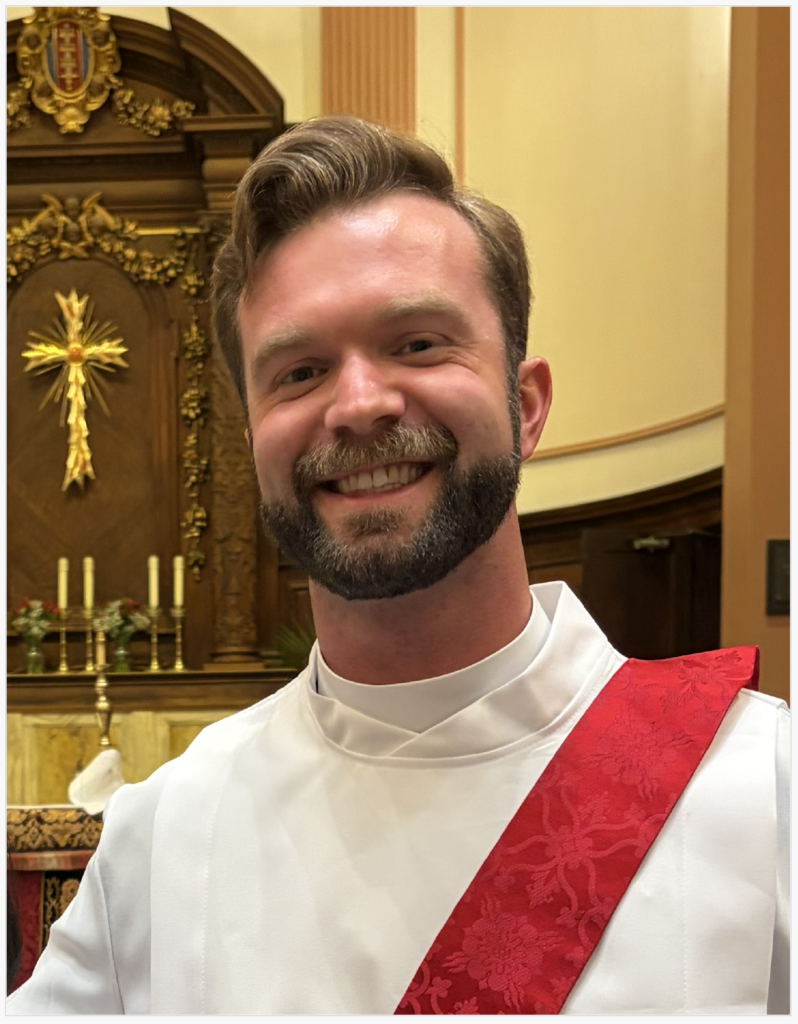
Rev. Alec Vaughn
Gospel: Matthew 22:15-22
This is probably one of the more commonly known sections of the
Gospels, among Christians as well as the wider world. That phrase
“Give therefore to the emperor the things that are the emperor’s and to
God the things that are God’s” comes across in TV shows, movies, and
in the dialogue of how we are to think about our relationship with
earthen powers and holy ones.
God, Truth, the powers that be in the world, all wrapped into one short
conversation, one silver bullet that the Pharisees and Herodians, who
tagged teamed this investigation into Jesus’s ministry, hoped to ensnare
Him in His own words. Jesus however was aware of this attempt and
gave them a no nonsense answer to their question. Jesus, the enfleshed
vision of God’s teachings, was aware of the metaphorical implications of
this question as well as the real life, practical consequences for taking a
particular stance on the matter of taxation. If you have ever had an error
or hiccup, I believe that is the correct term the IRS uses, in your taxes,
you will get a letter, or even better, an invitation to wear an orange
jumpsuit in Kansas for a few years.
Jesus was aware when answering this question and the influence he had
on the people around him, that people would consider his answer with
regards to how they live their daily lives. He knew that if he encouraged
people one way or another, it would impact their lives in a severe way,
whether that was in the religious world or the civil Roman world that
governed their daily lives. Jesus took deference in answering this
delicate question with regards to who would be listening, and who
would be most impacted by this question.
Jesus’s message in this passage seems pretty clear, at least at this
juncture in the Gospels. He encourages people to participate in the
happenings of the world around them, not as a sign of support or
participation, but instead to allow them to go about their other business
undeterred. And let us talk about that other business that Jesus mentions
in this passage. Jesus invites those listening to pay their share of what
they owe in the worldly economy, but in addition to that he invites
people to give to God what is God’s. What is that? What does that
mean?
Have you ever considered what it is that you, me, we, are called to give,
to do, for God? It is questions like this that drive people like me to go to
divinity school. I remember being in college and being home asking my
then parish priest in his office just prior to returning to college for the
next year about becoming a priest, and his response was “yea, you were
always drawn in by the big questions in life.” Not surprised at all by my
request that mid-August afternoon.
It is that thing that aches, like a joint or muscle, that if you just don’t
stretch it or scratch it, it will drive you clean out of your mind.
Jesus tells us in this passage to give to God what is God’s. That wording,
phrasing takes me to Frederick Buechner’s understanding of calling: that
“The place God calls you to is the place where your deep gladness and
the world’s deep hunger meet.” And to think of that for a moment, each
of us has something that makes each of us glad, happy, or in a deeper
sense, fulfilled. It is my inkling that Jesus is calling us in this passage to
perhaps not discuss at length the issue of taxation, but rather, to ponder
what it means to give to God what belongs to God.
Now I come from a belief system that each person, each life, is endowed
with gifts, talents, and desires that drive that person, that motivates and
satisfies them. There is a reason that I am here preaching and not in
Edward’s place playing the organ. Perhaps our relationship with music is
different. But I believe that these talents and gifts coexist in God’s
kingdom and serve different purposes in response to today’s Gospel
passage.
The same is true as I think about my friends whose vocations are in the
world of teaching and academics, medicine, marine research, music
therapy, law, engineering and design, service, and the welfare of others.
We are called, my friends, into the rich work of discernment and
understanding our talents and how they bring about God’s kingdom and
presence on Earth.
We are called to be stewards of our gifts, talents, and desires so that they
may be in service of God’s kingdom. That is what I think Jesus is asking
in part, in this passage of the Gospels.
We are called to steward the gifts and talents we have, or that inspire us
to bring about God’s message here in the material, earthen world. And
for each of us that will be different.
That is why the work of discernment, reflection, and pondering come in
handy. To stick with music, I am no musician, but I have an ear that
appreciates music, an activity I spent many afternoons and evenings in
Nashville doing, as singer songwriters filled venues coming from all
over the world to share a bit of their story and talent in hopes of making
it onto the big stage.
And what do many of the big artists do when they are surrounded by
30,000-40,000 of their fans, they thank them for coming out because if it
weren’t for the fans, those musicians wouldn’t have a job. If teachers
didn’t have students, their desire, role, would go unfulfilled. If a doctor
or nurse did not have a patient, then their skills and talents would go
unengaged. And this life is a place where we are called to engage with it in a tactile
and enfleshed way.
Jesus’s humanity is there to remind us that we are called to embody and
live out our hopes, dreams, calling, and desires in life.
That we are meant to live out these elements that make us come alive
and animated with life. We are called to be stewards of these gifts and
talents. And I return to this word as I reflect on my closing service at the
VA hospital where my boss, the Chief of the Chaplain Service shared
with myself and the other fellows the notion that all we have is what
God has given us, and we are called to be stewards of those gifts and
talents which we are able to perfect in this life.
Stewardship is another way of thinking about our responsibility to the
things in life we have been given and how we might share them in the
common life we live with our family, neighbors, parish, and community.
So I urge you to take time and reflect on that theme: What is yours that
you feel called to give to God, or to give back, that you have been
blessed with that makes you uniquely, you.
Amen.