Sunday Sermon
October 11, 2026 Year A
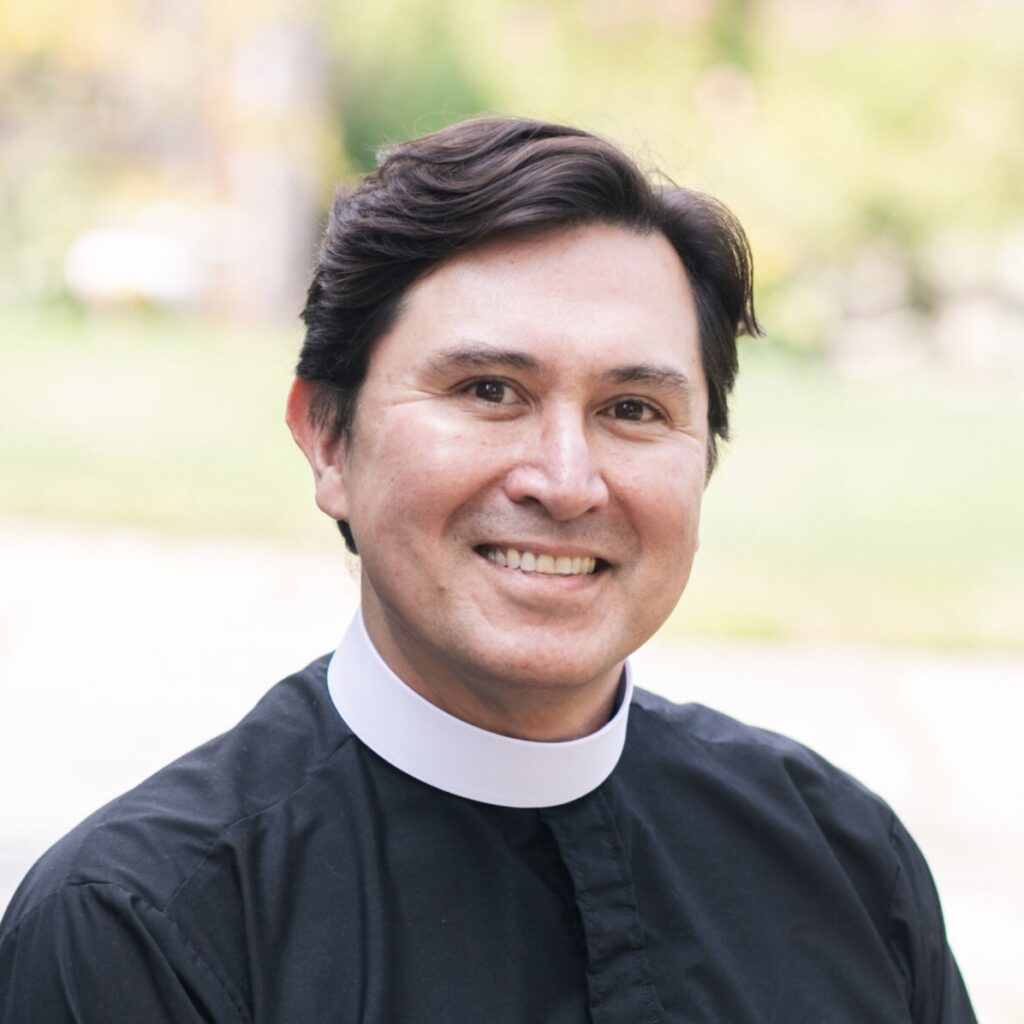
The Rev’d Michael J. Horvath, Gospel: Matthew 22:1-14
Every year since my arrival, I’ve attended our community Thanksgiving dinner at St. Mary’s. And every year, it follows its own familiar rhythm.
It is practically like our liturgy. We could print it in the bulletin. The officiant says, “How many people are coming?” And the people respond, “We don’t know. What if we don’t have enough? Perhaps we should buy more rolls.”
Meanwhile, the kitchen contains enough food to sustain a small expedition to the Arctic. There are mountains of stuffing, cranberry sauce requiring its own transportation, and desserts on every surface. Still, we believe one more bag of rolls would get us there.
I understand that impulse. I want people to be fed. But what interests me is how easily our anxiety takes over our eyesight. We can count the turkeys, see the stuffing, practically trip over the desserts, and still wonder whether there will be enough.
That question follows us out of the kitchen. Enough money. Enough time. Enough energy. Enough people to help. Enough certainty to let us breathe easily. We become so practiced at looking for what might run out that we can overlook what has already arrived.
Then Jesus tells us about a feast.
A king is celebrating his son’s wedding. The preparations are complete. The dinner is ready. The servants go out to summon the guests. Everything begins with the generosity of the host. Someone has prepared a place for them and wants them there.
Your presence would bring joy. Come.
The invited guests have other plans. One goes to his farm, another to his business. Their attention remains fixed on the responsibilities already occupying them. Meanwhile, a feast awaits.
Eventually, the king sends his servants into the streets. They gather everyone they find, people described as both good and bad. That is quite a guest list. Imagine trying to arrange the seating chart.
The room fills because the host keeps extending the invitation. The celebration begins with what the host has provided.
Then comes the guest whose missing wedding garment draws the king’s attention. The story turns toward judgment and expulsion. Its severity deserves our attention. Jesus tells this parable amid a fierce confrontation with religious leaders, and that conflict gives the story its troubling edge.
A traditional cultural interpretation (albeit disputed) says that Middle Eastern hospitality rules at the time required great hosts to also provide festive clothing so as not to single anyone out who may have been sartorially lacking. Matthew leaves the garment’s source unexplained, but this image offers a useful way into the story. The guest receives a place at the table and what he needs to participate in the celebration. Outwardly showing up or claiming a spot at the table is not enough; true participation in the kingdom requires accepting the transformation and provision that God offers.
God’s generosity includes the grace to live the life into which God calls us.
We hear that at baptism. In the baptismal liturgy, we promise to continue in prayer, seek Christ in other people, serve, and pursue justice and peace. Each promise receives the same response: “I will, with God’s help.”
Those words acknowledge the size of the undertaking and the source of our strength. God gives us forgiveness that helps us forgive, love that teaches us to love, and companions who help us carry responsibilities that once felt overwhelming.
Imagine the wedding garment as that grace taking shape in a human life. We put on mercy when we forgive. We put on generosity when we share. We put on compassion when someone’s suffering moves us to act. What we receive becomes something we can offer.
That is abundance coming to life among us.
As we enter our stewardship season and consider our Renewal of Commitment, I want us to begin by recognizing that life.
I think about someone arriving here with grief they can scarcely put into words. I think about a child like Lottie finding a familiar face and a place to belong. I think about people at Books & Breakfast discovering, somewhere between the first cup of coffee and the second, that they have become friends.
Someone made time. Someone prepared the room. Someone offered care. Someone’s financial gift helped make the gathering possible. Abundance takes shape through those particular offerings.
And I know exactly where things feel scarce at St. Mary’s. I see the bills, the demands on our staff, the repairs waiting for attention, and the ministries depending on a small number of faithful people. I know what it costs to keep this place running. The electric company accepts payment in a very specific form, and an inspiring sermon about abundance isn’t a form of payment they take.
Stewardship means being open to that reality, too. We give our full attention to what feels like lack. We ask where resources are stretched, where people are tired, and where an expense will require a difficult choice. Sometimes that sense of scarcity points toward a real shortage. Sometimes anxiety makes our possibilities harder to see. Faithful stewardship asks us to discern what we are facing.
We bring both our needs and our gifts into view. We count carefully, listen honestly, and consider what the resources entrusted to us can sustain.
Each of us brings particular circumstances to the question of pledging. Some have considerable freedom. Others manage their bills with great care. God knows the whole of those lives. Our invitation is to consider what we have received and what we can offer, with honesty and gratitude.
A pledge says, “I want to help this community flourish. I want someone else to receive the welcome that has mattered to me.” Through that commitment, generosity moves from one life into another.
Our budget gives practical shape to those commitments. We ask what will help people grow in faith, sustain the people who carry the parish’s daily work, and extend our care to our neighbors. The figures help us understand our capacity. Our shared purpose helps us decide how to use it.
The same questions belong in our conversations about assets. We have buildings, property, and financial resources entrusted to us. We have relationships in the community, experience gathered over generations, and people whose gifts are still emerging.
An old building can certainly present an impressive collection of impending repairs. Any building possessing “character” usually has strong opinions about maintenance. That same building can hold a gathering that changes someone’s life. Caring for it means attending to both its costs and its possibilities.
Our endowment likewise carries responsibilities: supporting ministry, helping us weather hardship, and sustaining the parish for those who follow us. Every asset invites a question of purpose. What life can this gift sustain? Whom can it serve?
Today’s collect asks that God’s grace precede and follow us. Grace goes ahead into the decision, the difficult conversation, and the coming year. Grace follows as we learn, adjust, and begin again. We undertake our stewardship within that promise.
Perhaps, before sending someone out for another bag of rolls, we might take a good look around the kitchen. Look at what has been brought. Look at the people offering it. See what is needed and what we have to share. Then ask who else we can invite.
May we look at St. Mary’s with that same care, gratitude, and expectation. God has placed gifts among us. Our Renewal of Commitment invites us to receive them, put them to use, and make room at the table.
Amen.