Sunday Service
September 13, 2026
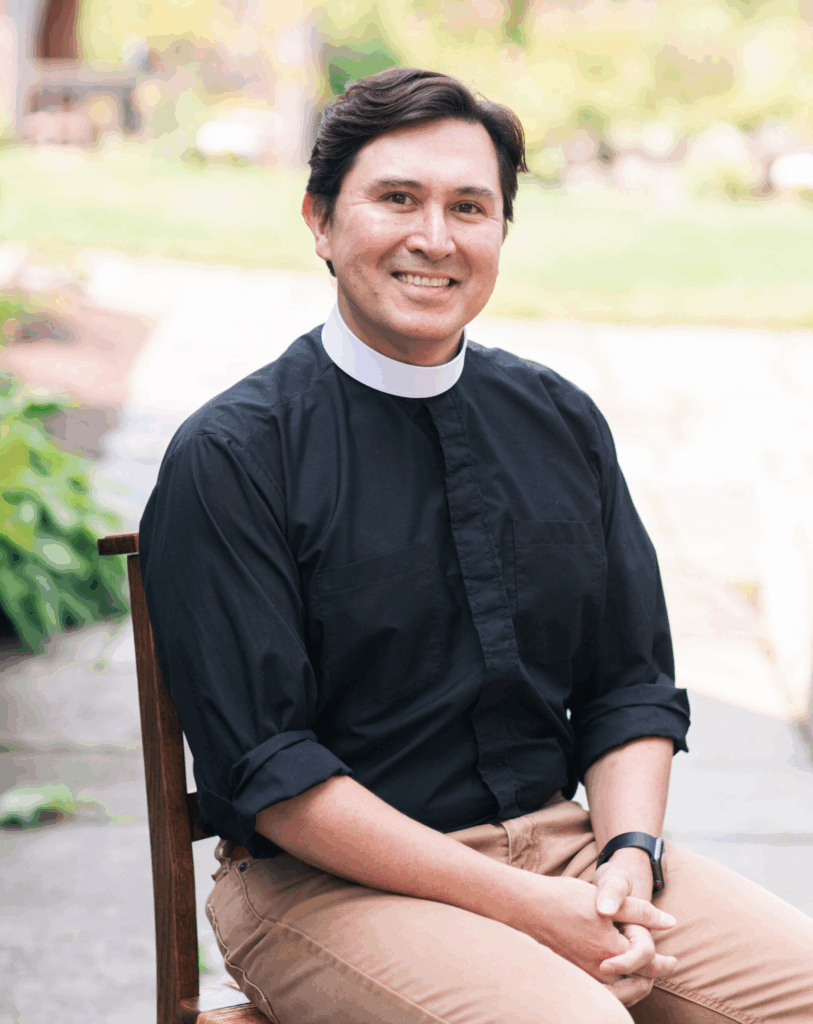
The Rev’d Michael J. Horvath
Psalm 103:(1–7), 8–13; Matthew 18:21–35
This has been a weekend of beginnings. On Friday evening, our Jewish neighbors
welcomed Rosh Hashanah, the beginning of a new year. Last night, St. Mary’s gathered
for our Stewardship Kick-Off Dinner, the beginning of our annual pledging season.
September is the season when people of faith gather around festive tables, examine
their lives, give thanks to God, and eat something sweet. This seems like a very
sensible approach to spiritual renewal.
Rosh Hashanah invites the Jewish people to receive the new year as a gift. Apples are
dipped in honey as a prayer for sweetness in the year ahead. The shofar sounds as a
call to awaken. Worshipers remember God’s faithfulness and begin the sacred work of
return.
Rabbi Jeffrey Myers of the Tree of Life Congregation in Pittsburgh describes Rosh
Hashanah as the “birthday of the world,” a celebration of gratitude for creation. His
words carry particular weight because Tree of Life endured the horrific antisemitic attack
of October 2018, in which eleven worshipers were killed.
Rabbi Myers asks what gift we might offer God on the birthday of the world. His answer
is kindness. We can greet people warmly, speak graciously, and recognize the
humanity of those we encounter throughout the day. He writes that we possess the
ability to “drown this planet in kindness.”
Rabbi Myers shows us that gratitude can grow even in wounded soil. Gratitude
remembers that violence has never exhausted the goodness of God. It receives life as a
gift and responds by becoming a gift to others.
That same movement shapes our readings today: grace remembered becomes grace
shared. The psalmist speaks directly to his own soul: “Bless the Lord, O my soul, and forget not
all his benefits.”
Apparently even the psalmist occasionally needed to give himself a little talking-to.
“Soul, pay attention. Soul, remember. Soul, we are going to practice gratitude today.”
Then he begins naming the benefits of God. God forgives. God heals. God redeems.
God crowns us with mercy and loving-kindness. God satisfies us with good things. God
renews our youth like an eagle’s.
I find that final promise increasingly appealing with each passing year.
The psalmist understands that gratitude begins with memory. We remember the
compassion that carried us through grief. We remember the forgiveness that freed us
from shame. We remember the person who appeared at precisely the right moment. We remember the strength that came when our own strength had run thin. We remember the prayers, the meals, the music, the laughter, and the hands extended toward us.
Such memories shape the people we become. When we remember mercy, we grow
merciful. When we remember generosity, we grow generous. When we remember that
our lives are held in the loving hands of God, we become more willing to open our own
hands.
The servant in Jesus’ parable suffers from a failure of memory. He owes the king ten thousand talents, an impossible sum requiring several lifetimes and a remarkably successful parish gala to repay. He falls to his knees and asks for
patience. The king gives him something far greater. He cancels the entire debt.
The servant leaves the king’s presence with his life restored. His family has been
spared. His future has reopened before him. He has received an astonishing act of
mercy.
Then he meets a fellow servant who owes him a much smaller sum. The man makes
exactly the same plea: “Have patience with me.” Yet the first servant seizes him by the
throat and sends him to prison. Somewhere between the king’s throne and the village street, the servant forgets.
He remembers what another person owes him and forgets what he himself has
received. He carries the king’s mercy as though it belonged to him alone. Grace
reaches him, yet he gives it nowhere else to go.
That is the tragedy at the heart of the parable. The servant’s debt has disappeared,
while the old accounting system still governs his heart. He has been released, yet he
continues to live as a captive. He has received a new life, yet he treats his neighbor
according to the rules of the old one. Jesus teaches that grace seeks to travel through us. Forgiveness received becomes
forgiveness offered. Kindness received becomes kindness extended. Generosity received becomes generosity practiced. God’s grace enters our lives and searches for a path into the world.
Gratitude opens that path. Our stewardship season invites us to remember what we have received and to allow
that memory to shape our response. We remember this parish and the ways God has met us here. We remember worship
that has lifted our hearts, music that has stirred our souls, and sacraments that have
nourished us. We remember pastoral care offered during illness, grief, transition, and
joy. We remember friendships formed, newcomers welcomed, meals served, neighbors
supported, children encouraged, and sacred spaces cared for.
We remember that St. Mary’s has become part of the story of God’s grace in our lives.
A pledge grows from that memory. It says, “I remember what I have received here, and I
want that grace to continue its journey.”
Through our pledges, worship continues. Pastoral care continues. Formation, music,
outreach, hospitality, and prayer continue. New people discover a place where they are
seen and valued. People who feel alone find companionship. Neighbors in need receive
food and care. Our buildings remain places of beauty, refuge, and welcome. Our shared
vision of a thriving community—where faith, love, and action come alive—moves from
words into flesh.
A pledge supports a budget, and it also expresses a spiritual decision. It declares that
God’s generosity will shape the way we use what has been entrusted to us. It connects
the grace we remember with the hope we share for the future.
Our season of Renewal invites this movement throughout the whole of our lives. God’s
grace reaches us, renews us, and flows through us.
It flows through financial giving. It flows through time, service, patience, encouragement,
forgiveness, and kindness. It flows when we learn someone’s name, visit someone who
feels alone, serve a meal, care for creation, welcome a child, or speak a gracious word
to someone whose day has been difficult.
Each of these acts begins in the same place: “Bless the Lord, O my soul, and forget not
all his benefits.”
Remember the grace.
Remember the mercy.
Remember the people through whom God has cared for you.
Remember the community that has held you.
Then allow the grace you remember to become the grace someone else receives.
Rosh Hashanah celebrates the gift of a new year. Psalm 103 celebrates the gifts of
God’s mercy. Jesus tells a story about the danger of receiving mercy and forgetting it.
Our stewardship season asks us to remember—and then to respond.
Perhaps this is the gift we can offer God in this season of Renewal: a community whose
memory of grace becomes generosity; a community through which mercy keeps
moving; a community ready to help drown this corner of the world in kindness.
“Bless the Lord, O my soul, and all that is within me, bless his holy Name.”
May our pledges bless the Lord. May our service bless the Lord. May our forgiveness
and kindness bless the Lord. And may every grace we have received find its way
through St. Mary’s into the life of another.
Amen