
Sunday Sermon
August 9, 2026
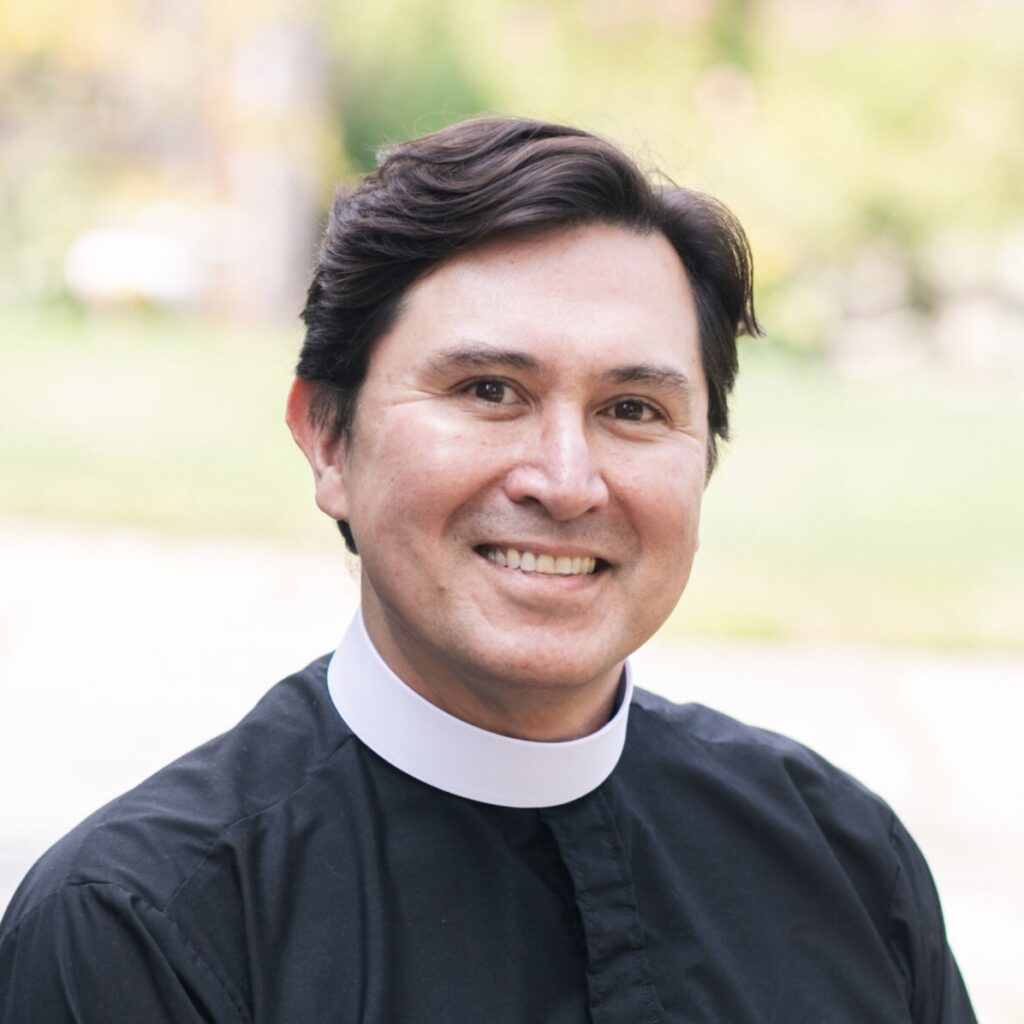
The Rev’d Michael J. Horvath
Gospel: Matthew 14:22–33
Preachers have spent centuries explaining exactly where Peter went wrong in our Gospel passage today, usually with some version of “He took his eyes off Jesus.” Poor Peter takes three or four miraculous steps across the surface of the Sea of Galilee, loses his footing during a windstorm, and forever becomes the model for insufficient faith, along with Thomas. That seems a little harsh. If I managed three steps across Barnstable Harbor before going under, I would expect at least a plaque near Mattakeese Wharf. Peter receives a lecture.
The other disciples receive far less scrutiny, even though they remain in the boat. They see Jesus walking toward them across the water. They hear his voice. Peter may be impulsive. He may occasionally speak before his brain has fully reviewed the material. Yet when Jesus calls, Peter responds. Something in him decides that being near Jesus matters more than remaining where he feels secure.
The story begins with the disciples exactly where Jesus has sent them. Jesus makes them get into the boat and sends them ahead while he dismisses the crowd and goes up the mountain to pray. By evening, the boat is far from land, battered by the waves and struggling against the wind. These experienced fishermen know the sea. They have spent hours pulling at the oars and making little progress. Their arms ache, their clothes are soaked, and their nerves are frayed. Then, sometime between three and six in the morning, they see a figure coming toward them across the water.
They assume they are seeing a ghost, which feels perfectly reasonable. Something has appeared in a place where no human being should be able to stand, and the disciples cry out in terror.
Then the figure speaks: “Take heart, it is I; do not be afraid.”
Peter recognizes the voice, or at least wants to recognize it. He calls back, “Lord, if it is you, command me to come to you on the water.” Jesus gives him a single word: “Come.”
That word moves the entire story. Peter can remain inside the boat with the others, surrounded by wood, rope, sails, and the familiar tools of his trade. The boat is taking a beating, yet it still offers some protection. Jesus stands somewhere beyond it and simply says, “Come.”
Peter lifts one leg over the side of the boat, shifts his weight, and places his foot on a surface that has never held him before. The waves are still rising, the wind is still blowing, and darkness still surrounds him. Peter carries all his fear with him, and he steps toward Jesus anyway.
That is courage. Courage begins when something matters more to us than our fear. Peter wants to be near Jesus, and that desire becomes strong enough to move him. His heart may be pounding, but he still takes the step.
We tend to judge actions by their outcomes. When something succeeds, we call it wise, inspired, or faithful. When something falters, we search for the mistake. We admire the ministry that grows, the program that attracts a crowd, the career that advances, the relationship that lasts, and the plan that unfolds according to schedule. We prefer stories with measurable results because measurable results allow us to know who succeeded and who failed.
The Gospel offers another way to measure a life. Jesus asks whether we heard his voice and moved toward him. By that measure, Peter’s venture is filled with faith. When Jesus says, “Come,” Peter comes, venturing beyond the limits of everything he knows.
Many of us carry memories of ventures that unfolded differently from what we hoped. We pursued a vocation that led somewhere unexpected. We gave ourselves to work that received little recognition. We tried to repair a relationship that remained broken. We began a ministry that eventually ended. We took a risk and later wondered whether the whole thing had been foolish. Looking back, we tend to see the place where we sank. Christ may see the place where we answered his call.
Walking on water was never the purpose of Peter’s journey. Peter was trying to reach Jesus; the water was simply the space between them. Courage has a direction. It moves us toward someone we love, something we trust, or a purpose worthy of our lives. A person speaks the truth because honesty matters more than approval. Someone asks for help because life matters more than pride. A congregation ventures into unfamiliar territory because sharing the Gospel matters more than preserving familiar routines.
Eventually Peter notices the strength of the wind. Fear takes hold of him, and he begins to sink. At that moment, Peter offers one of the shortest and most honest prayers in Scripture: “Lord, save me!” He needs help, and he asks for it.
Matthew tells us that Jesus immediately reaches out his hand and catches him. Immediately. Jesus reaches for Peter while Peter is still sinking. Before he says anything about Peter’s doubt, he takes hold of him. Grace arrives first as a hand.
That sequence matters. Jesus does speak about Peter’s faith, but he does so while holding him. Correction comes from the one who has already reached into the water and refused to let him drown. Jesus never stands at a distance shouting advice about better water-walking technique. He enters the storm, crosses the sea, and catches his frightened disciple.
Peter’s courage brings him closer to Jesus in more than one sense. His brave steps carry him physically toward Christ. His sinking teaches him that Christ can be trusted when his own strength fails. Peter leaves the boat thinking faith might allow him to master the waves. He returns knowing that faith means being held by Jesus in the middle of the tempest.
That knowledge will matter because Peter will stumble again. He will make promises he cannot keep, fall asleep in Gethsemane, and eventually deny Jesus. Yet Jesus will continue reaching for him. Peter’s life becomes a long story of stepping out, sinking, being caught, and beginning again.
Perhaps that is why Peter becomes such an important figure in the life of the Church. His authority comes through experience rather than perfection. He knows the exhilaration of courage and the humiliation of failure. He knows what it is to make a great confession of faith and then completely misunderstand what Jesus is doing. He knows what it is to promise loyalty and discover the limits of his courage. Most importantly, he knows what it is to be caught, forgiven, restored, and called again.
This story matters for the Church because churches love boats. We love structures, traditions, schedules, committees, policies, and familiar ways of doing things. Boats serve a purpose. They carry people through deep water, give shape to a common life, and provide some shelter from the storm. They can also tempt us to believe that safety and faithfulness always look the same. A congregation can spend years gripping the sides of the boat while Jesus calls from somewhere beyond it.
Courageous ministry always includes the possibility of disappointment. A new worship service may attract fewer people than we hoped. An invitation may go unanswered. A new leader may make mistakes. A congregation may take a step toward renewal and discover that renewal asks far more of us than changing a few programs or choosing a theme for the year.
Such experiences teach us how to listen, how to depend upon one another, and how to recognize the hand of Jesus when our plans begin to sink. The faithful question reaches deeper than “Did it work?” The faithful question asks, “Did we hear Jesus calling, and did we move toward him?”
Success has its own gifts, of course. A thriving ministry can feed people, heal wounds, build community, and reveal the love of God. Yet success alone can never tell us whether we have been faithful, because sometimes the safest decision produces the cleanest outcome. Sometimes the courageous decision leaves us soaked and gasping for breath. The Gospel invites us to look for Christ in both places.
At the end of the story, Peter and Jesus climb into the boat together. Peter returns soaked, shaken, and probably breathing hard. He also carries knowledge the others have yet to experience. He knows what the water felt like beneath his feet. He knows what happened when fear overwhelmed him. Above all, he knows the strength of the hand that caught him. Then the wind ceases, and the disciples worship Jesus, saying, “Truly you are the Son of God.”
Peter never turns walking on water into a repeatable spiritual practice. He does something far more human and far more faithful. He hears Jesus say, “Come,” and moves toward him.
The world may remember where Peter sank. Jesus remembers that Peter came. And when Peter could go no farther, Jesus crossed the remaining distance and took him by the hand.
Amen
St. Mary’s Episcopal Church, Barnstable, MA